8 min read
Tokyo to Hakuba Ski Bus Guide: Fares & Luggage Rules
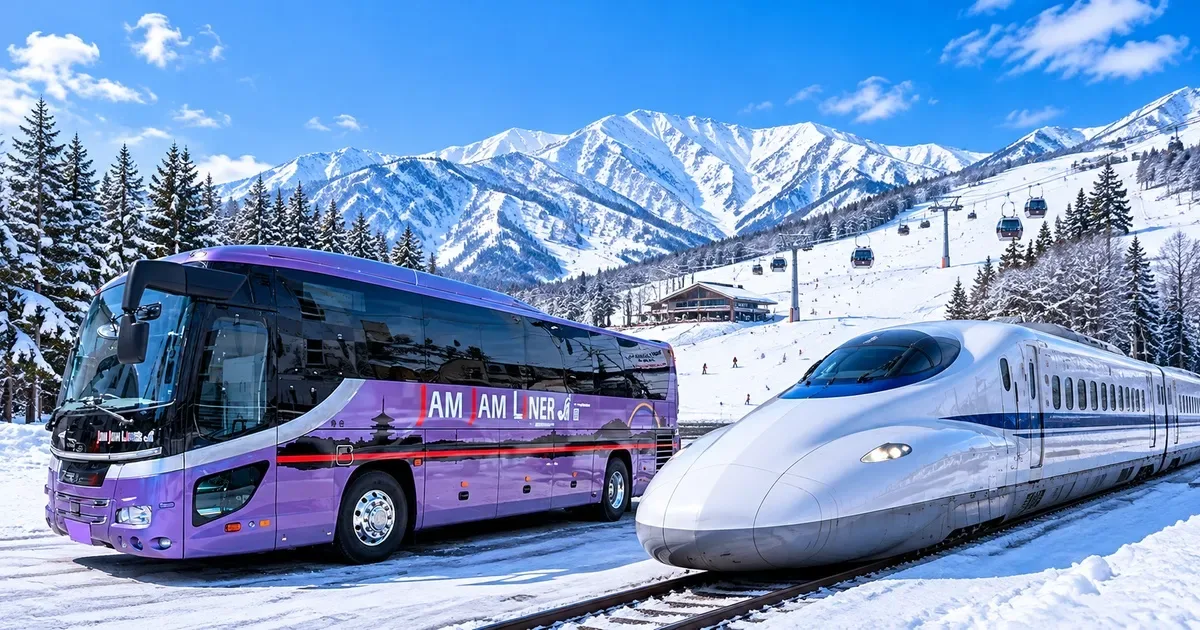
- Tokyo Hakuba Ski Bus
- Direct Bus from Tokyo to Hakuba
- Haneda Narita Airport Hakuba Bus
- Hakuba Overnight Ski Bus
When heading to Hakuba from Tokyo for skiing or snowboarding, the first question is how to get there. Carrying ski equipment and suitcases through Shinkansen ticket gates and station stairways takes considerable physical energy. For travelers unfamiliar with Japanese signage, transfers can also cause concern about getting lost.
There are four main options: connecting via Shinkansen and local bus, the Express Azusa train, driving a personal or rental car, and taking a direct ski bus with no transfers. Because each option differs in cost, travel time, and luggage handling, selecting the right one for your travel style is key to maximizing your time on the slopes.
This article provides a comparison table of each method, details on stops and baggage rules for the direct bus SNOW LINER, steps for navigating early morning arrivals on overnight buses, and answers to frequently asked questions.
Introduction
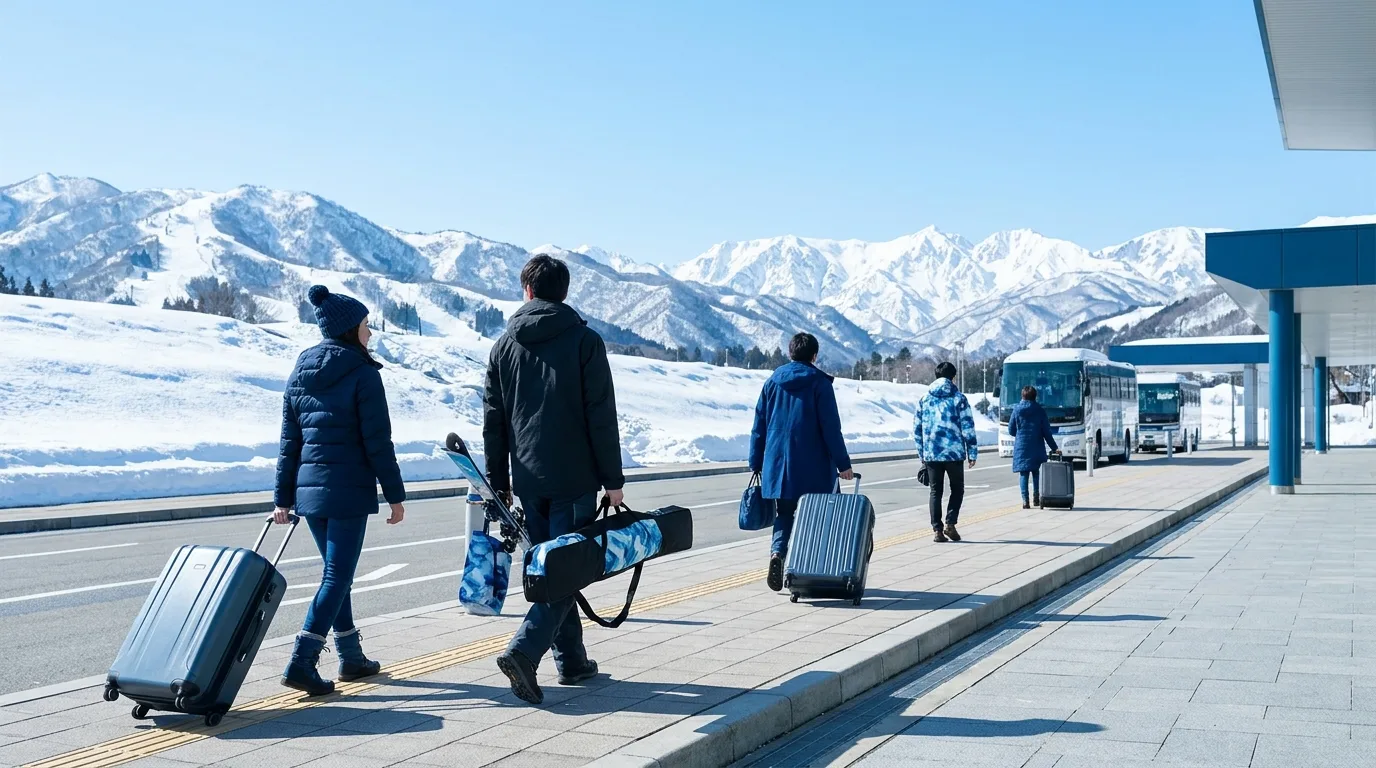
While the straight-line distance from Tokyo to Hakuba is roughly 200 km, physical fatigue varies significantly depending on your choice of transportation. For travelers carrying skis or snowboards, the distance walked while carrying luggage is just as important a benchmark as cost and travel time.
This article is prepared by the editorial team at travel site JAMJAM, based on materials provided by the operating company Jam Jam Express. Because operating dates, schedules, and fares may change, please check the latest information on the booking screen before making a reservation.
Key Factors to Consider When Traveling from Tokyo to Hakuba
The Burden of Transfers with Heavy Gear
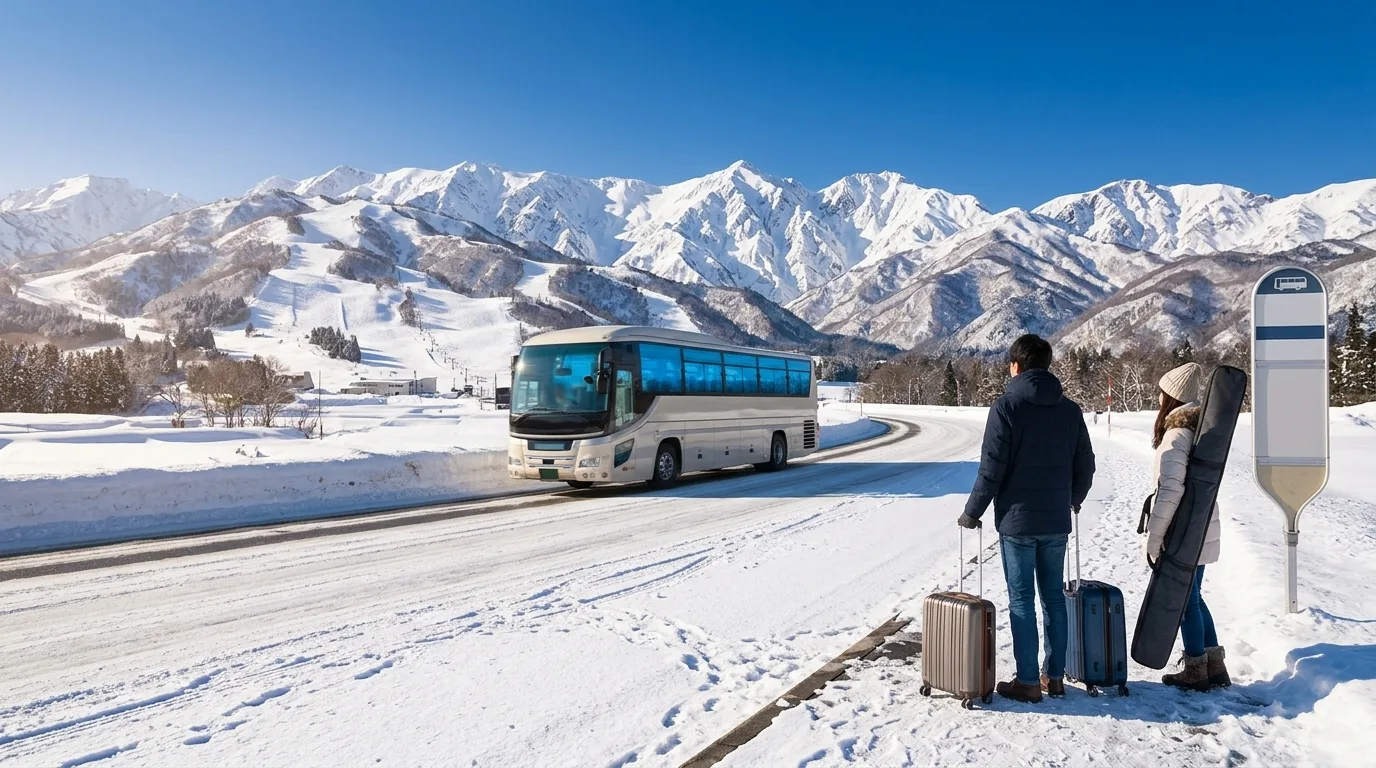
An easily overlooked aspect of traveling from Tokyo to Hakuba is the repeated handling of luggage at transfers. Carrying a ski bag and a suitcase simultaneously leaves both hands full. Navigating Shinkansen platforms, locating bus stops at Nagano Station, and reading ticket machines or signboards under those conditions drains energy before you even reach the slopes.
For international travelers who may struggle with Japanese signage, the burden increases further. Every additional transfer adds another potential spot for confusion.
Smooth Access to Ski Resorts Upon Arrival
Another key factor is the distance from your drop-off point to your target slope. Hakuba is not a single ski resort, but a valley comprising multiple areas such as Happo-one, Tsugaike Kogen, Iwatake, Goryu, and Hakuba 47. Arriving at Hakuba Station alone may still require additional transport to reach your accommodation or resort.
Next, let's examine how each of the four transport options compares across these key factors.
Comparing Tokyo to Hakuba Transport: Cost, Travel Time, and Luggage
Shinkansen + Local Bus Route Features
The Shinkansen route is the fastest. Taking the Shinkansen from Tokyo Station to Nagano Station and transferring to a local bus takes approximately 2.25 hours to Hakuba Goryu, costing 10,200 yen one way with two transfers (Source: Kosoku Bus.com (Transport Comparison)). While ideal for those prioritizing speed, remember that you must carry your luggage during the transfer at Nagano Station.
Express Azusa Route Features
The Limited Express Azusa offers direct service from Shinjuku toward Hakuba. Sitting through without transfers is convenient, but direct runs are limited, offering fewer departure times. Additional transport from the station to your accommodation or slopes must also be arranged separately.
Direct Ski Bus (SNOW LINER) Route Features
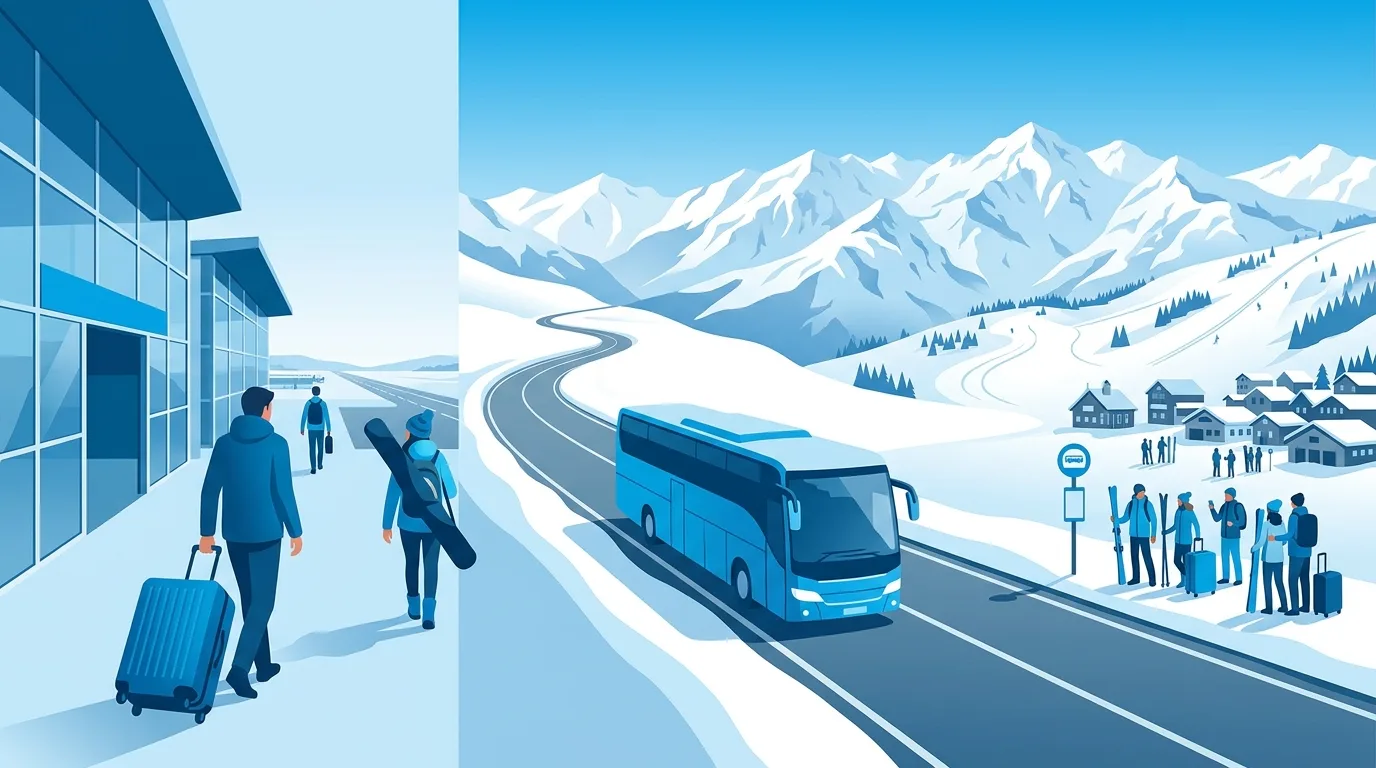
Direct buses transport passengers from airports or central Tokyo straight to ski resort stops without transfers. SNOW LINER adult fares range from 8,500 to 12,500 yen one way (depending on the service and date), with one suitcase and one set of ski/snowboard equipment checked free of charge. Though travel time is longer than the Shinkansen, once boarded, you do not need to handle your luggage until arrival.
Driving a Personal or Rental Car
While driving can reduce per-person costs for groups, winter travel to Hakuba requires snow tires or tire chains. For drivers lacking snow experience, particularly international travelers, driving presents significant challenges.
| Criteria | Direct Bus (SNOW LINER) | Shinkansen + Local Bus | Express Azusa | Car |
|---|---|---|---|---|
| One-Way Cost | 8,500–12,500 yen (varies by bus & date) | 10,200 yen (Source: Kosoku Bus.com (Transport Comparison)) | Express fee + base fare | Tolls + fuel + rental fee |
| Travel Time | Approx. half-day (day) / sleep on bus (overnight) | Approx. 2.25 hours (Source: Kosoku Bus.com (Transport Comparison)) | Direct runs are limited | Depends on traffic and road conditions |
| Transfers | None | 2 | None for direct runs | None |
| Luggage Handling | 1 ski set + 1 suitcase checked free | Carried by hand for entire journey | Carried by hand for entire journey | Ample vehicle capacity |
Now that we have covered the overview, let's examine the SNOW LINER route network and stops in detail.
SNOW LINER Direct Ski Bus: Key Strengths and Major Bus Stops
Direct Routes from Narita, Haneda, and Central Tokyo to Major Slopes
SNOW LINER operates direct bus services connecting Narita Airport, Haneda Airport, Yokohama (YCAT), Odaiba, Tokyo (Bus Terminal Tokyo Yaesu), Chubu Centrair International Airport, and Nagoya with Hakuba. For the 2026–27 season, 14 routes run between December 18, 2026, and March 28, 2027 (operating days vary by route). The main advantage over train routes is the ability to head directly to Hakuba on the day of airport arrival without transferring.
A daytime departure leaves Haneda Airport at 8:00 AM, allowing travelers arriving by morning flights to reach Hakuba by evening on the same day.
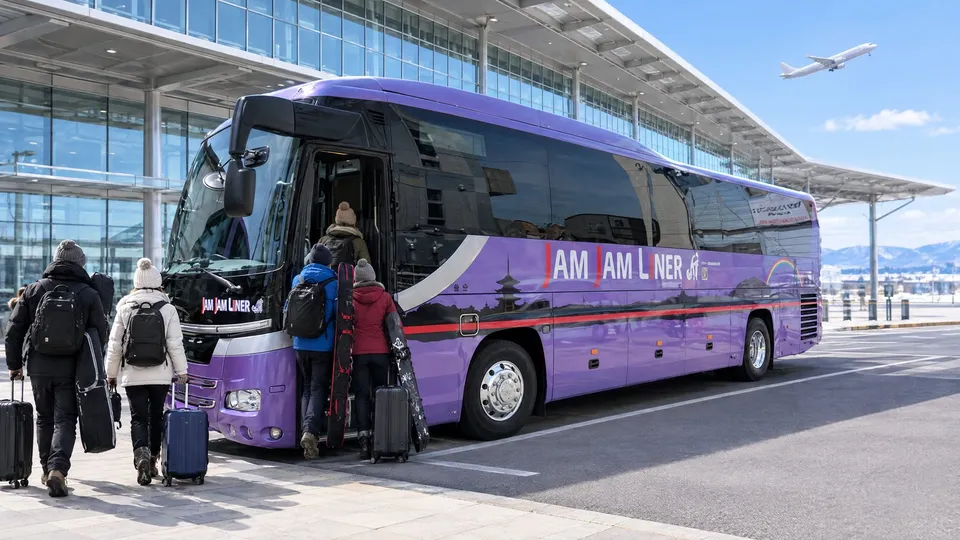
From central Tokyo, a daytime bus departs Tokyo Station at 8:30 AM. Leaving in the morning allows you to spend your first afternoon active in Hakuba.
Wide Selection of Drop-Off Areas: Happo, Tsugaike, Iwatake, Goryu, and More
Available drop-off stops include Happo Bus Terminal, Tsugaike Kogen, Iwatake, Goryu, Hakuba 47, Hakuba Norikura, and Hakuba Cortina. Select routes also stop at Omachi Onsen Village, Nagano Station East Exit, and Chikuma River Sakaki PA. Being able to disembark close to your accommodation minimizes secondary travel after reaching Hakuba. Check which stop is closest to your hotel when booking.
Simple Boarding Process by Name and Onboard Wi-Fi
Boarding requires only stating your name. If you encounter language barriers, show the name section on your booking confirmation email. Look for the JAMJAM Liner bus stop sign at the departure site. Vehicles feature standard 4-row seating with onboard Wi-Fi.
Next, let me clarify baggage allowances and any potential extra fees.
Baggage Allowances and Loading Rules for Ski Buses
Free Checked Baggage Limits for Skis, Snowboards, and Suitcases
SNOW LINER allows one suitcase and one pair of skis (or snowboard) to be stored in the trunk free of charge per passenger. This accommodates standard luggage arrangements for airport arrivals—one large suitcase and one equipment bag.
Fees for Additional Luggage Beyond the Free Limit
Any additional piece of checked baggage costs 1,500 yen (paid on site). For example, if traveling with two suitcases and one ski bag, you will pay 1,500 yen for the extra item on the day of departure. Having cash ready helps speed up loading.
Carry-on Baggage Dimensions and Important Notes
Carry-on bags should fit in the overhead rack or under your seat. Keep valuables, passports, and lift ticket vouchers in your hand luggage, as trunk luggage cannot be accessed during rest stops.
With luggage rules clarified, let me explain how to choose between daytime and overnight departures.
Choosing Between Daytime and Overnight Buses and Early Morning Arrival Tips
Daytime vs. Overnight Schedules and Benefits
Daytime buses leave in the morning and reach Hakuba before dark, making them ideal for settling in, checking into hotel rooms, and starting skiing the next morning. Overnight buses depart at night and arrive in Hakuba the following morning, saving a night of accommodation and letting you hit the slopes on day one. Certain overnight routes pick up across Narita Airport, Yokohama, Haneda Airport, Odaiba, and Tokyo, allowing travelers landing in the evening to board directly.
SL131 Bound for Hakuba (Departs Narita 21:20, Yokohama 21:50, Haneda 22:20, Odaiba 23:00, Tokyo 23:40)
¥10,500
提供: マガジン STG
詳細を見るReturn buses run directly from Hakuba stops to Haneda Airport, Narita Airport, Tokyo, Yokohama, and Nagoya (note: there is no return service to Chubu Centrair Airport). An arrival at Haneda by 3:10 PM aligns well with evening domestic or international flights.
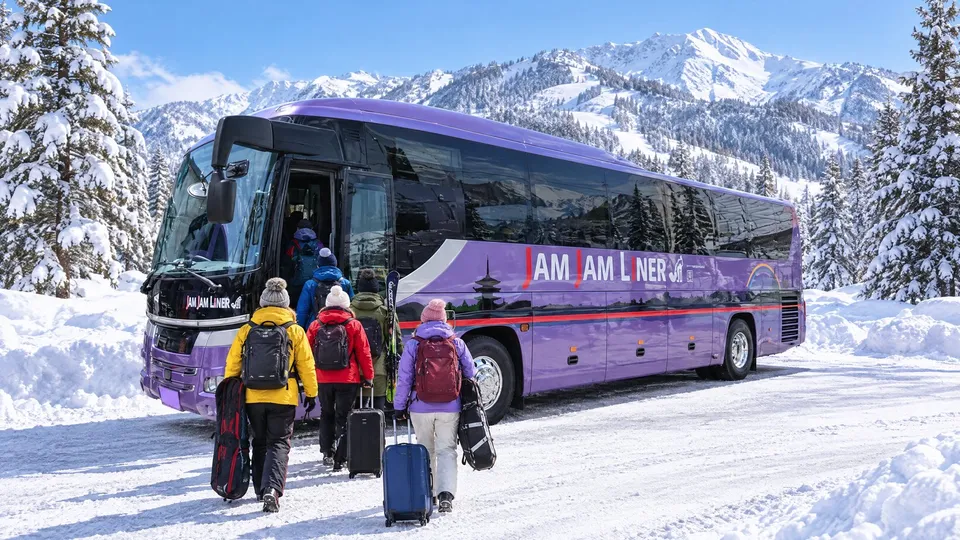
For evening international flights out of Narita Airport, a service arriving at Narita by 3:30 PM is a practical option. Ensure you allow enough buffer time before flight check-in.
If you want to ski on your final morning, later arrival options such as reaching Haneda at 5:10 PM are available depending on your flight schedule.
Waiting Areas, Changing Rooms, and Locker Facilities for Early Arrivals
Arriving early via an overnight bus leaves a 2 to 3-hour window before ski lifts open. Base centers at Hakuba ski resorts usually feature changing facilities and coin lockers, but opening hours vary by facility. Checking the schedule for facilities near your drop-off stop in advance is recommended. Wearing your ski apparel on the bus and storing suitcases in coin lockers upon arrival minimizes luggage handling before hitting the slopes.
Free Regional Shuttle Buses to Ski Resorts
Shuttle buses connect major ski resorts throughout the Hakuba Valley during winter. If your disembarkation stop differs from your target slope, these shuttles provide convenient transport. Timetables and routes may change by season, so review resort guides on the day of travel.
- ArrivalGet off at the stop near your hotel or resort
- LuggageStore suitcases in lockers or at your hotel
- ChangeUse changing rooms at resort center houses
- ShuttleTake regional shuttle to your target resort
- SkiHit the slopes as soon as lifts open
Finally, here are answers to common questions asked prior to booking.
Frequently Asked Questions About Tokyo–Hakuba Ski Buses
Can I Book Bus Seats Without Accommodation?
Yes. SNOW LINER accepts bus-only one-way and round-trip bookings without accommodation. You can book your hotel separately and reserve bus transportation alone. Bookings start from a single passenger, making it suitable for solo travelers.
Rest Stop Schedule and Restroom Breaks
Buses stop at service areas along the route for restroom breaks. Locations and timing vary based on traffic conditions; please follow onboard announcements and confirm departure times before stepping off the vehicle.
Handling Delays Caused by Snow or Traffic
Because buses travel mountain roads in winter, travel times fluctuate depending on snowfall and road conditions. If connecting to a flight on your return trip, choose a bus schedule that arrives at the airport hours ahead of your flight. Arrival times cannot be guaranteed.
Multilingual Support and Solo Travel
The booking platform JAMJAM is available in seven languages: English, Traditional Chinese, Simplified Chinese, Korean, Thai, Vietnamese, and Japanese. At boarding, you need only state your name or show your booking confirmation email, eliminating language barrier concerns.
Conclusion: Choose Your Route Based on Luggage and Transfer Strain
When traveling from Tokyo or its airports to Hakuba, choose the Shinkansen route for speed (approx. 2.25 hours, 10,200 yen, 2 transfers) (Source: Kosoku Bus.com (Transport Comparison)) or a direct bus to minimize transfer effort and luggage handling. For travelers carrying heavy ski gear or concerned about navigating transfers in Japanese, direct buses like SNOW LINER provide a hassle-free alternative.
Operating dates, schedules, and fares vary by route and are subject to change. Once you decide on your target resort stop and departure time, check the SNOW LINER schedule and fares on the booking page to select the service that fits your itinerary.
Frequently Asked Questions
- How do I get to Hakuba ski resorts from Tokyo?
- To travel from Tokyo to ski resorts like Hakuba Goryu, take the Shinkansen and transfer to a local bus. Travel time is about 2.25 hours, with a one-way fare around 10,200 yen. (Source: Kosoku Bus.com (Transport Comparison))
- How do I get to Hakuba Village from Tokyo?
- From Tokyo, combine the Shinkansen with a local bus to reach Hakuba Village. Accessing Hakuba Goryu takes about 2.25 hours and costs 10,200 yen one way. (Source: Kosoku Bus.com (Transport Comparison))
- How do I travel to Hakuba by Shinkansen from Tokyo?
- Take the Shinkansen from Tokyo Station to Nagano Station, then transfer to a local bus heading to Hakuba. The journey to Hakuba Goryu takes about 2.25 hours and costs 10,200 yen one way. (Source: Kosoku Bus.com (Transport Comparison))